LO4: Professional standards
Introduction
Both individually and in teams, you apply a relevant methodological approach used in the professional field
to formulate project goals, involve stakeholders, conduct applied research, provide advice, make decisions,
and deliver reports. In doing so, you keep in view the relevant ethical, intercultural, and sustainable
aspects.
Self assessment: Proficient
Team Charter
The group made a team charter and I helped with structure and rules.
Link to team charter
STARR Reflection
Situation
At the start of the semester, our team needed clear agreements to collaborate effectively and prevent
confusion or conflict during the project.
Task
My task was to support the creation of a structured team charter with clear rules and expectations.
Action
I helped define the structure and content of the team charter by contributing agreements on
communication, task division, and team rules
(DOT: Workshop – Team charter / Collaboration agreements).
Result
The team charter created clarity about how we work together and served as a reference point during the
semester.
This supports LO4 because it demonstrates applying a professional working approach within a team.
Reflection
This proof taught me that clear agreements early on reduce misunderstandings later.
Next time, I want to add specific conflict-resolution steps and review moments to keep the charter
“alive” instead of a one-time document.
HMW questions
We got a workshop from Pennie about HMW questions based on POV so in our group we all made 2 HMW
questions
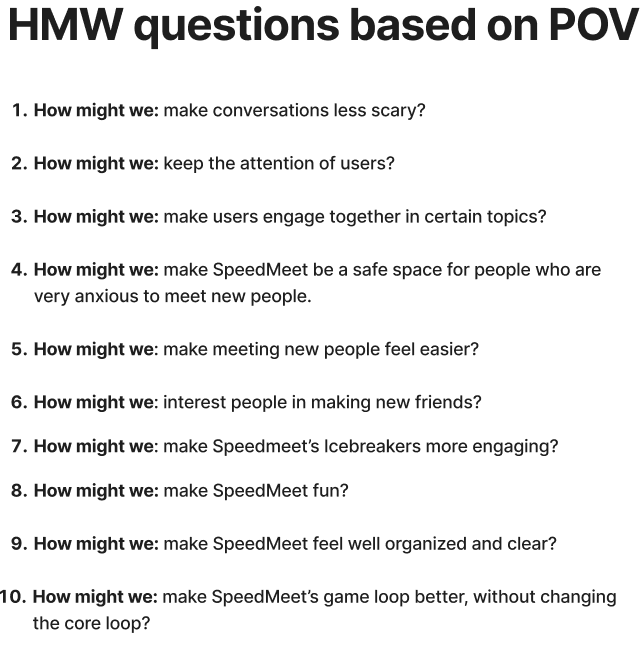
After we made these, we showed them to Pennie and she told us that these questions are correctly
formulated for working on designing based on users needs.
STARR Reflection
Situation
During a workshop, we learned how to formulate “How Might We” questions based on a Point of View (POV)
to design from user needs.
Task
My task was to create two HMW questions that correctly reflected user needs and could guide concept
development.
Action
I translated the target audience and their challenges into focused HMW questions and validated them with
feedback from the lecturer
(DOT: Workshop – HMW questions / Problem framing, DOT: Field – Expert feedback).
Result
The HMW questions were confirmed as correctly formulated and usable for design exploration.
This supports LO4 because it shows methodical problem framing aligned with professional design practice.
Reflection
This taught me that strong questions lead to stronger concepts.
Next time, I want to connect each HMW question to explicit evidence (research insight or interview
quote) so the framing becomes even more substantiated.
Group Retrospectives/scrum
Every sprint we check the trello, assign tasks, and do retrospectives.
My contribution is to be active during the retrospectives and help assign tasks.
These were the notes I originally took:
First retrospective:
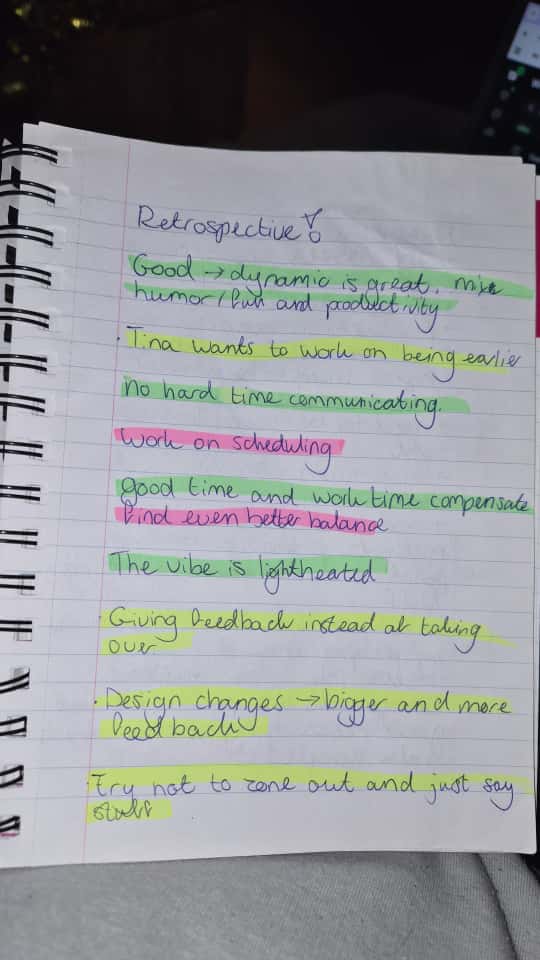
We also made a document with all the retrospectives to keep track of all that has been discussed.
You can read it here
STARR Reflection
Situation
To manage progress and maintain team alignment, we worked in sprints using Trello and held regular
retrospectives.
Task
My task was to actively contribute during retrospectives and support task assignment and team
reflection.
Action
I participated in sprint planning and retrospectives by reviewing the Trello board, helping define
tasks, and reflecting on what went well and what needed improvement.
I also documented retrospective notes and ensured the team could revisit decisions
(DOT: Workshop – Scrum/Retrospective method, DOT: Showroom – Reporting/documentation).
Result
The retrospectives helped the team improve collaboration and maintain structure throughout the project.
This supports LO4 because it shows applying a professional iterative working method.
Reflection
This showed me that retrospectives become more valuable when actions are specific and measurable.
Next time, I want to define concrete improvement actions per sprint (owner + deadline) so changes are
actually implemented.
Advisory report
The group has made an advisory report for the project.
Advisory report
I helped with writing scalability and advice for the app.
STARR Reflection
Situation
To support the client and stakeholders, our group produced an advisory report with recommendations for
the project.
Task
My task was to contribute to the report by writing about scalability and giving practical advice for the
application.
Action
I formulated recommendations focused on future scalability and implementation considerations, making
sure they were clearly communicated in the report
(DOT: Showroom – Advisory report / Recommendation writing).
Result
The advisory report provided structured guidance for stakeholders and supported informed
decision-making.
This supports LO4 because it demonstrates professional reporting and advisory communication.
Reflection
This proof taught me that advice becomes stronger when it is clearly linked to risks and constraints.
Next time, I want to include a short prioritization (must/should/could) so stakeholders can apply
recommendations more effectively.
Client Meetings
Every two weeks +/- we have a client meeting with Jacqueline, where we keep her up to date with the
progress of our project, ask her any questions we have for her and vice versa. This is very important,
as this is how we know that we’re on the right track.
First client meeting:
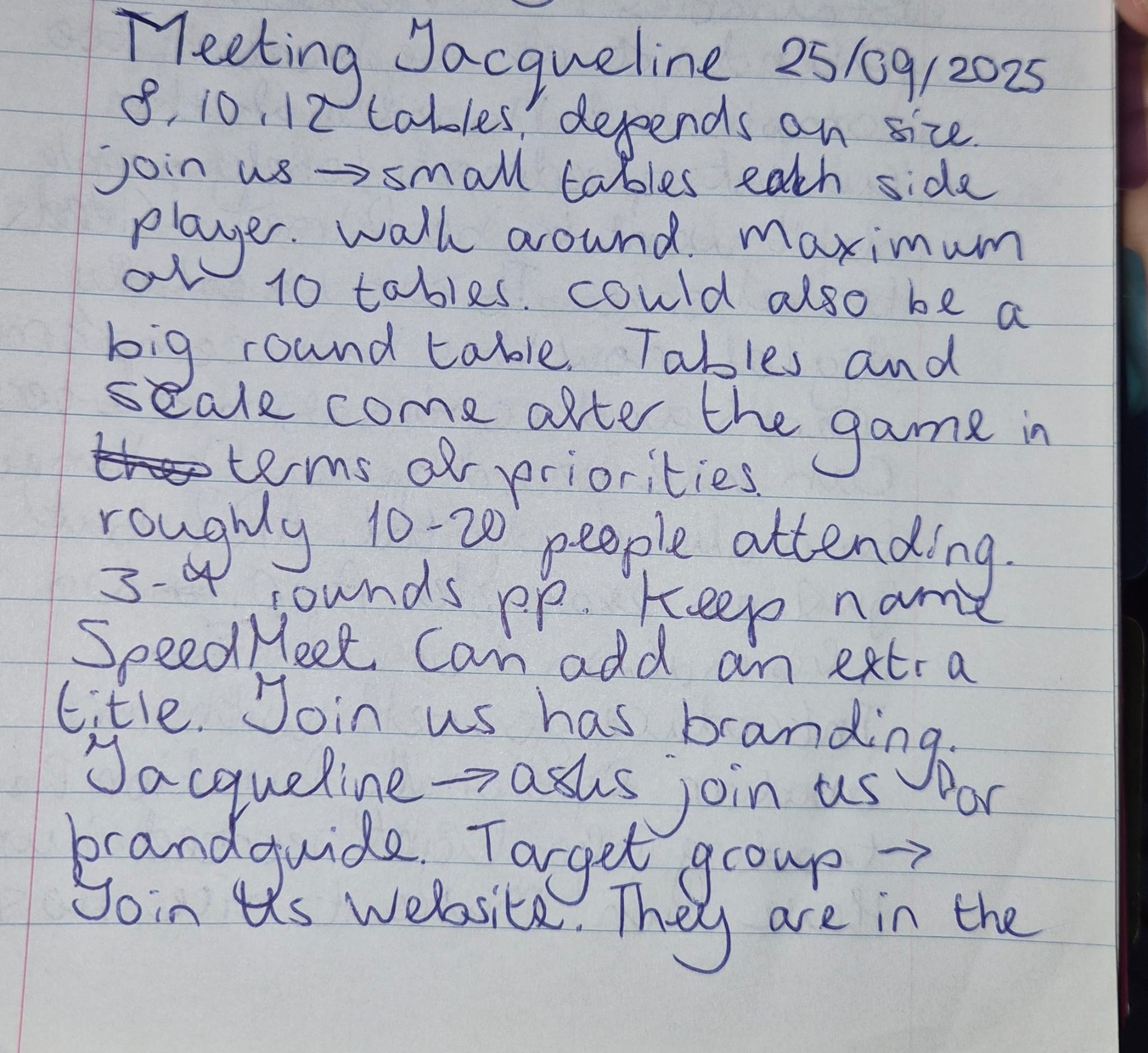
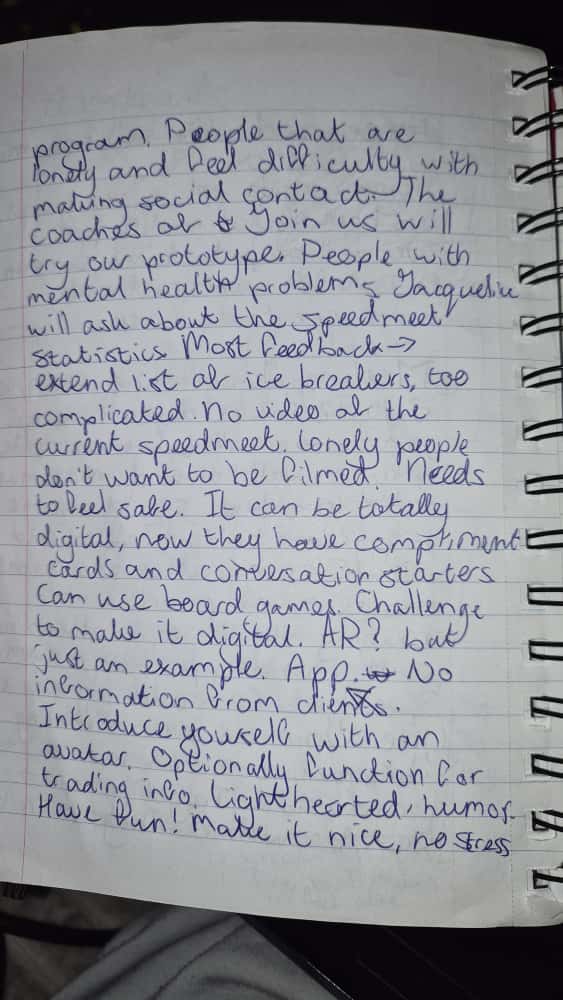
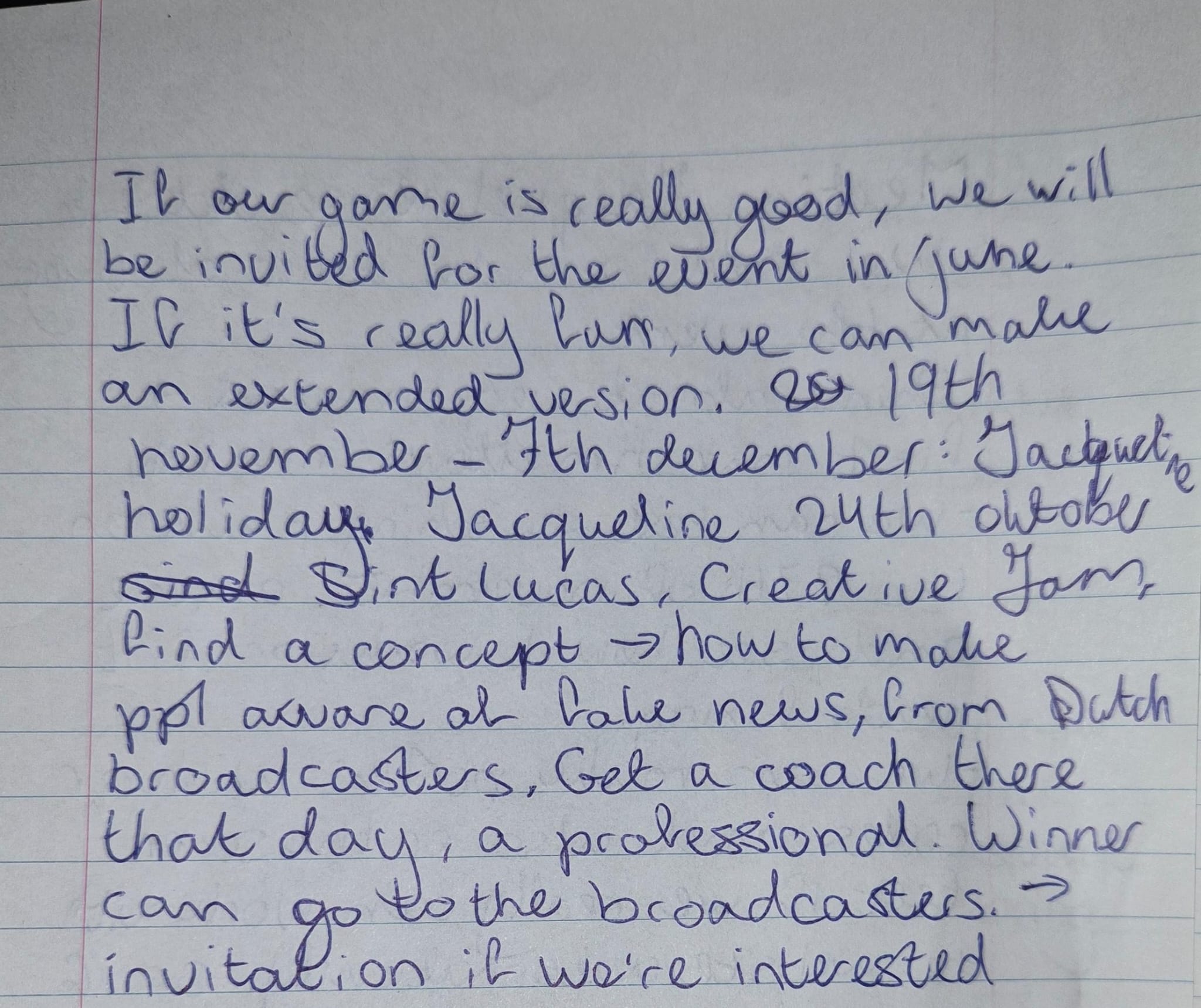
We learned more about the scope of the project, gained new ideas on how to give speedmeet shape, new
insights about the last speedmeet and the people attending.
Third client meeting:
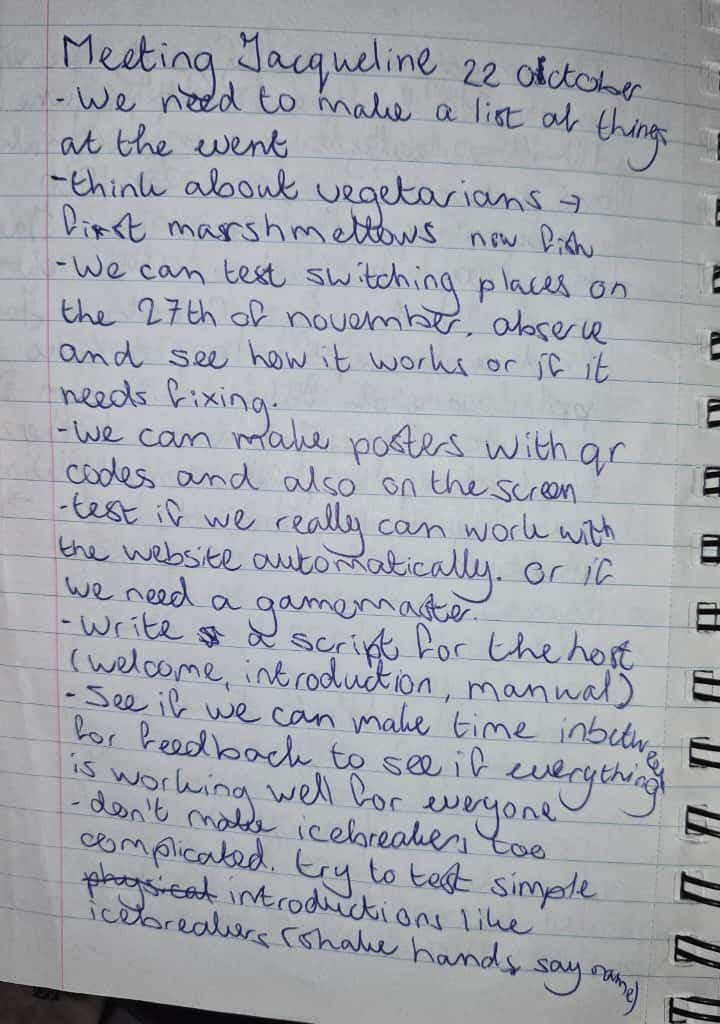
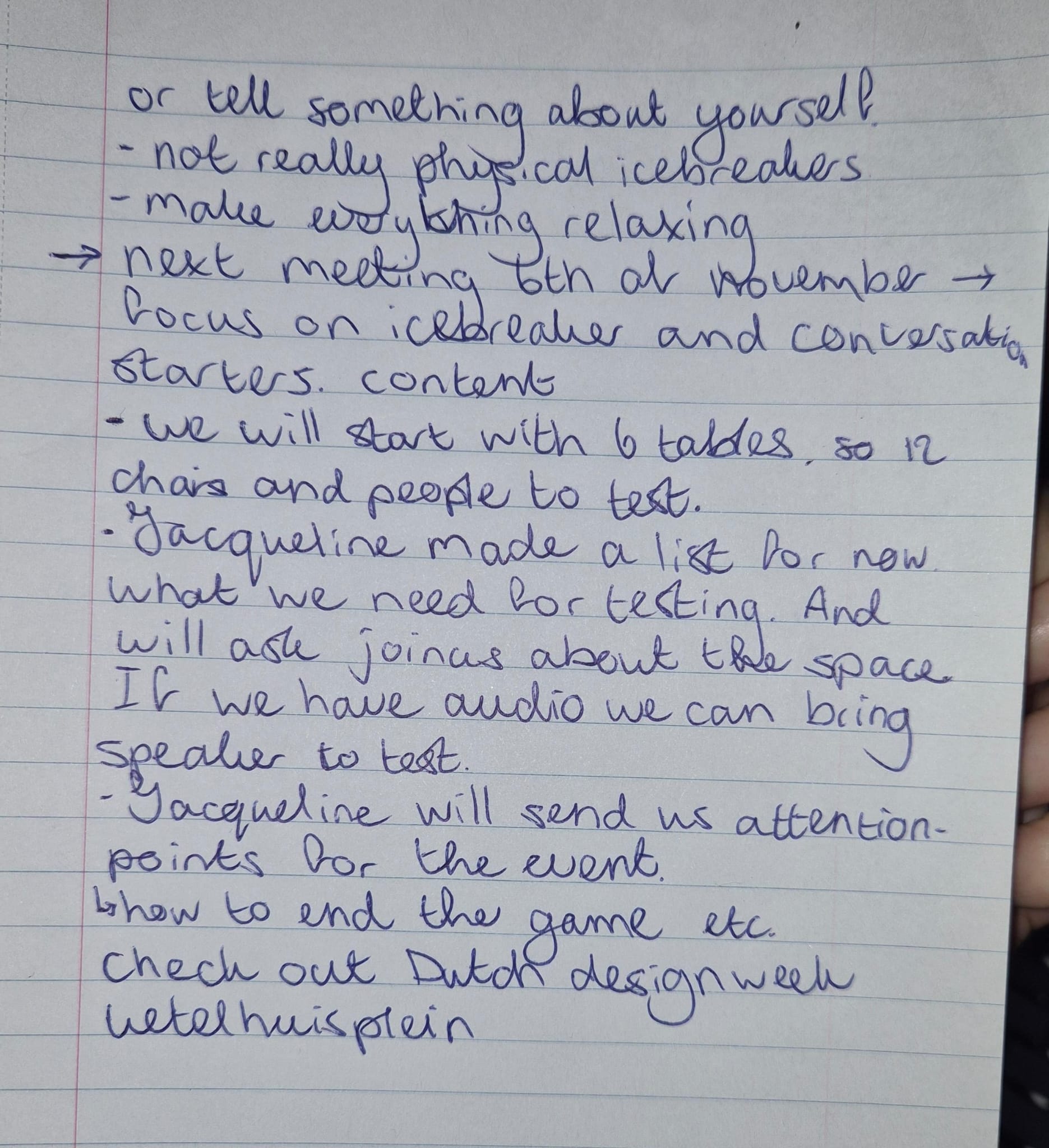
We enlightened Jacqueline about our concept and plans for the game and gained feedback about certain
visuals (like no roasting fish at the campfire for vegetarians). Also advice about testing if we want to
make everything digital and start with a small group. Test simple icebreakers, and focus on making those
before our next meeting. And another important one is to make time for feedback during the speedmeet to
check if everything is working properly for everyone. She will send us a follow-up e-mail with more
details and things to look out for.
4th client meeting:
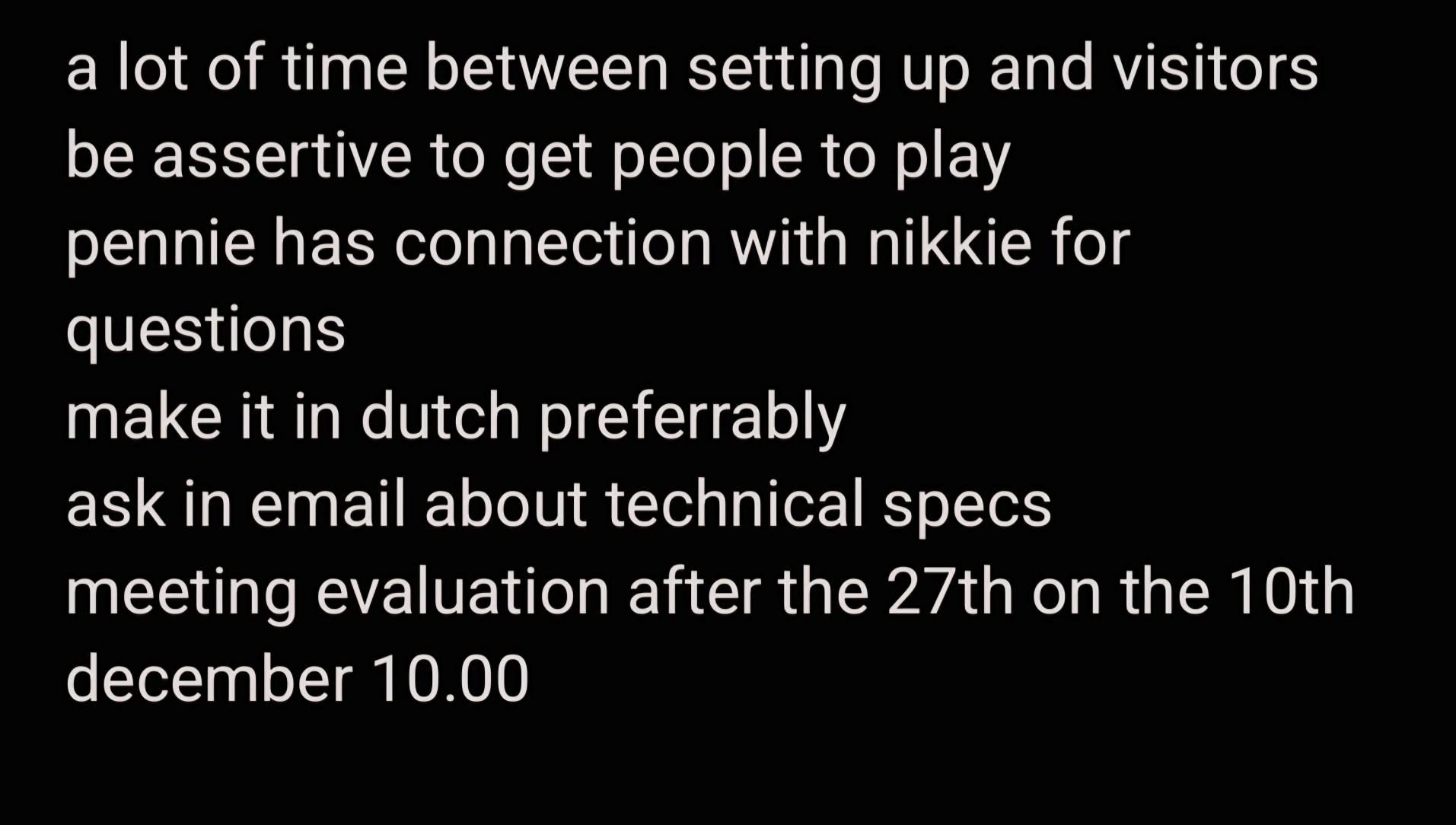
This was the last quick meeting we had before the event and was about everything we still needed to know
about it.
I wrote the doc for the client meetings
Link for the client meetings
STARR Reflection
Situation
Throughout the semester, we held regular client meetings with Jacqueline to align on goals, validate
decisions, and receive feedback.
Task
My task was to contribute to stakeholder involvement by documenting meetings and ensuring feedback was
translated into project actions.
Action
During meetings, we presented progress, asked questions, and collected feedback to stay aligned with the
client’s expectations
(DOT: Field – Interview / Stakeholder meeting).
I documented the meetings in a structured document so the team could reference decisions and follow-up
points.
Feedback about inclusivity (e.g., avoiding a roasting fish visual for vegetarians) and testing scope
influenced our design decisions.
Result
The meetings helped us stay on track, adapt the concept responsibly, and make decisions based on
stakeholder input.
This supports LO4 because it shows professional stakeholder involvement and decision-making.
Reflection
This taught me that stakeholder feedback can significantly impact design choices and ethical fit.
Next time, I want to convert meeting outcomes into a clearer action list per session, so follow-ups are
faster and more traceable.
Ethical considerations
In the document below I wrote down ethical considerations for our project:
Link to ethical considerations
STARR Reflection
Situation
Our project targets young adults who struggle with social contact and may experience mental health
challenges, which requires careful ethical decision-making.
Task
My task was to identify and document ethical considerations relevant to our target audience and project
context.
Action
I wrote an ethical considerations document that addressed privacy, psychological safety, informed
participation, and responsible testing limitations
(DOT: Library – Ethics and guidelines analysis, DOT: Showroom – Reporting).
I also connected ethical constraints to practical decisions, such as not testing directly with the
target group due to privacy policy and sensitivity.
Result
The document helped the team make responsible choices and communicate why certain research/testing
approaches were restricted.
This supports LO4 because it shows applying ethical standards in professional practice.
Reflection
This proof taught me that ethical thinking is not separate from design—it directly shapes what is
possible.
Next time, I want to add mitigation measures per risk (what we do to reduce harm) so the document
becomes even more actionable.
Translations
Speedmeet
For our project we made our game in Dutch as that is the first language of our target audience. This is
why we have a script for the host and a manual for the speedmeet in both Dutch and English. My
contribution was actively giving feedback, quality control and helping with grammar.
Link to script
pdf
Link to manual pdf
I also translated the big screen prototype to Dutch in Figma
Link
to prototype
STARR Reflection
Situation
Because our target audience’s first language is Dutch, the game and supporting materials needed to be
understandable and accessible in Dutch, while also remaining shareable in English for stakeholders.
Task
My task was to support translation quality, grammar, and clarity for the host script, manual, and
prototype texts.
Action
I provided feedback, quality control, and grammar improvements for both Dutch and English versions of
the materials, and translated prototype content in Figma to Dutch
(DOT: Workshop – Collaborative editing / Quality review).
This ensured that instructions and tone matched the target audience while remaining professional for
stakeholders.
Result
The project materials became clearer and more accessible for the intended users and more communicable to
stakeholders.
This supports LO4 because it demonstrates intercultural/language awareness and professional
communication standards.
Reflection
This taught me that translation is not only literal language conversion—it is also tone, clarity, and
audience fit.
Next time, I want to validate translated instructions with a quick readability check (short user check
or peer review) to ensure they are understood instantly.